Just nailed by Stage 1 Oral exam for Commercial. Knocked out the written the other day. Looking to go the distance with the Commercial Stage 1 flight check. Will report back when that is clear.
Showing posts with label stage 1. Show all posts
Showing posts with label stage 1. Show all posts
Monday, February 2, 2009


Tuesday, March 4, 2008
Good to go, SOLO!
Flight #: 044
CFI: Kristie H.
Aircraft: Robinson R22 Beta II
Aircraft ID: N956SH
Duration: 1.0hrs
Cumulative Time: 49.4hrs
Well, officially passed Stage 1! Conditional Pass - Definitively Closed.
Short flight today, consisting entirely of Kristie killing the engine on me and yelling "Engine Failure" on me. I nailed it every time. A few 180 Autorotations as well to make sure I kept my airspeed up in the green. Again, nailed it.
Thankfully we finished quickly as we got a burst of freezing rain as we crossed the runway heading back to parking.
I'm cleared for solo flights!
CFI: Kristie H.
Aircraft: Robinson R22 Beta II
Aircraft ID: N956SH
Duration: 1.0hrs
Cumulative Time: 49.4hrs
Well, officially passed Stage 1! Conditional Pass - Definitively Closed.
Short flight today, consisting entirely of Kristie killing the engine on me and yelling "Engine Failure" on me. I nailed it every time. A few 180 Autorotations as well to make sure I kept my airspeed up in the green. Again, nailed it.
Thankfully we finished quickly as we got a burst of freezing rain as we crossed the runway heading back to parking.
I'm cleared for solo flights!
Thursday, February 28, 2008
Stage 1 Flight Test - Conditional Pass!
Flight #: 043
CFI: Richard O..
Aircraft: Robinson R22 Beta II
Aircraft ID: N8361N
Duration: 1.0hrs
Cumulative Time: 48.4hrs
Woot! Pass. Well, conditional pass. But, still. I'm psyched. This was a great flight. Felt really good throughout the whole thing. I was really on for this flight. I was a little anxious... but not nervous. I knew what I knew... and there was nothing that could have been done at that point... just focus on flying. So, what did the Stage 1 Flight Test consist of?
I've got to nail the Engine Failure/Collective issue and run a few more autorotations to maintain my airspeed. Other than that... we're green for solos!
I have to decide where to go now.
CFI: Richard O..
Aircraft: Robinson R22 Beta II
Aircraft ID: N8361N
Duration: 1.0hrs
Cumulative Time: 48.4hrs
Woot! Pass. Well, conditional pass. But, still. I'm psyched. This was a great flight. Felt really good throughout the whole thing. I was really on for this flight. I was a little anxious... but not nervous. I knew what I knew... and there was nothing that could have been done at that point... just focus on flying. So, what did the Stage 1 Flight Test consist of?
- Pre-flight Weather Checks - It is up to me to make a good weather decision about the flight. After checking the weather it was pretty clear that today was a perfect day to fly. Calm, cool and sunny. Aced it.
- Paperwork - Before each flight there is a maintenance folder that needs to be filled out. This consists of checking maintenance logs, hobbs timer, etc. All pretty easy, but it has to be done before the flight. Aced it.
- Pre-flight - A nice checklist for you to follow to ensure the safe operation of the helicopter. Aced it.
- Startup - And there is also a checklist to follow for startup. Aced it.
- Lift-off - Once we are run up and ready to go, we start off in a hover. Aced it.
- Gauge Checks - Always check gauges before doing anything of significance. Especially before takeoff. I asked Richard to do something for me in the cabin since I did not want to take my hand off the collective in a hover. He slyly did I what I asked and at the same time pulled an instrument fuse. I caught it on my gauge check. Sneaky Richard... Sneaky. Aced it.
- Communications - There are certain items to communicate to the tower before departure. Today's was, "Hillsboro tower, helicopter 8361-November at HAI with information Echo request west departure." "Helicopter 61-November, Hillsboro tower, cleared to cross runway 02 for west departure." "cross 02, 61-November". And off we go. Aced it.
- West Practice Area - We headed out to WPA for a few maneuvers. Very easy flight out. I had been taught to follow the roads out... but Richard mentioned that I really don't want to shadow the big roads... just in case. Stick to the less busy areas. Aced it.
- Settling With Power - Settling with power is a state where the rotor tip vorticies get so large that you no longer have sufficient lift to keep the helicopter in the air. In this test, I climbed up to 2000ft, got in to a tailwind situation and slowed down to pretty much of a 2000ft hover. All of a sudden you get vibrations... and this is the beginning of ETL (Effective Translational Lift) disappearing... and the onset of SWP. I lowered collective to lessen the vorticies and pushed forward to get out of them. While I got out of SWP effectively, Richard thought I was being a "puss" and got out too early. So he asked for it again... and this time, he wanted me to wait for the "dirty vibrations". This is the actual onset of SWP... and the vibrations are much more significant. So, I did. And got out of it the same way. Miss on the first try, Aced it on the second.
- Engine Failure - This is the what you practice for. Richard, in the middle of our conversation about wind at 1200ft, says "Engine Failure", and rolls off the throttle. I lower collective pitch and put us into an auto rotation. Missed it. As it turns out, this is part of my conditional pass for the stage check. As Richard told me afterwards, when I'm pulling over 20" of manifold pressure in flight, I have about 1 second to drop the collective before I lose engine RPM and get into a bad situation. The correct action is to "punch that fucker through the floor". I did, but slowly and smoothly. I need to be fast and abrupt.
- Weather Check - Before we return into the airspace we need to check weather to make sure we are aware of conditions before we return. In this case, it was still Echo and no changes. Aced it. But...
- Low RPM Recovery - Just as I switched back to tower frequency after checking weather Richard rolled the throttle down. I immediately noticed the change in noise and rolled throttle back on. Aced it.
- Charlie Pattern - We headed back in to Charlie pattern. I needed to determine if there was other traffic in Charlie and which direction they were flying today. It just so happened there were two other helicopters and they were doing left traffic patterns. I noticed this and jumped in line. Aced it.
- Normal Approach - As I have mentioned before, my biggest problem area is picking my descent point and hitting my landing point, so this was a real thing for me. I started early on my descent and started coming in a little shallow. I corrected my descent rate and hit my spot dead on. Aced it.
- Straight-In Autorotation - After a normal takeoff, Richard asked for a straight-in autorotation. I set up for the approach and came in as I wanted to. Fought rotor RPM a little, but got things under control and came in to a nice hover. Aced it.
- Steep Approach - Went around for another pattern in Charlie and came in for a steep approach. While this was executed well, it rushed the flare and it was a little jerky. Not bad, just not smooooth. Aced it.
- Running Landing - Running landings are not hard... they are just a bit loud and violent. You come in over the taxiway or runway at 40 knots at 20 feet. Get low and level out. Then go slow until you drop out of ETL and plop on to the runway at about 10 knots. You come to a skidding halt, steering with your cyclic and pedals. My running landing was successful but I could have kept on course a little better. I ended up on the right side of the taxiway... a little more than I wanted, but success. Aced it.
- Low RPM Recovery - I picked up from the running landing to a hover and started into a air taxi (20 ft, 40 knots) and Richard rolled down throttle on me... again. Again I caught it. Aced it.
- Slope Landing - There is a man-made hill in Charlie pattern for use in slope landing practice. Executed this nicely, although it was a little slow. Aced it.
- 180-Turning Autorotation - This is basically a maneuver where you enter an autorotation and need to turn in the opposite direction in order to safely land. This was the other area of my conditional pass. I entered nicely, completed the turn without too much concern over the RPM. Problem was, I bled off too much airspeed. I dropped to 50KIAS... which is just to slow. Missed it.
- Max Performance Takeoff - As mentioned in an earlier blog entry... this is a procedure that I've done a number of times and so far have done quite well each time. This one was no different. Aced it.
- Return to parking - After the final round in Charlie pattern Richard was happy with the Stage 1 and wanted to head back to base. I made the call; "Hillsboro tower, 61-November at the north taxiway, request HAI." "61-November, cross both runaways, proceed to parking.", "Cross both runways, 61-November". Off I went.
- Low RPM recovery - On the way back to base, after crossing both runways, Richard rolled down the throttle on me during the air taxi... again, I caught it. Aced it.
- Shutdown - Another nice checklist for one to follow during shutdown. Aced it.
- Post-flight check - After each flight, the pilot in command is required to do a walk though on the helicopter to ensure that there were no issues during the flight. It's a fast process, check the teletemps (thermometer strips that show max temperatures that occurred), feel the bearings, etc. No issues. Aced it.
- Debrief - This is a verbal walk-through of the flight between Richard and I. We went over the good and bad of the flight and this is where I got the signoff and conditional pass.
I've got to nail the Engine Failure/Collective issue and run a few more autorotations to maintain my airspeed. Other than that... we're green for solos!
I have to decide where to go now.
Wednesday, February 27, 2008
Stage 1 Ground Test - Passed!
Passed it!
It was great, really nailed it. I studied like madman, and it paid off. Take a look:
Airspace Study Sheet
Stage 1 Q&A Review Document
Stage 1 - Pre Solo Questions
A new CFI, Richard O. was my CFI for this oral test. Richard will also be my CFI for the flight tomorrow.
I did make a few mistakes, stupid stuff.
I switched up some airspace information that was OBVIOUSLY wrong. He asked me to re-explain it... and I caught it. Probably nerves more than anything. If you are really interested in the details, I grouped Bravo, Charlie and Delta airspaces together when talking about VFR cloud clearances and flight visibility minimums. It should have been Charlie, Delta and Echo.
I was asked a question about translational tendency and I answered correctly, but could not completely explain the details. Translational Tendency is the tendency for the helicopter to drift to the right when in a hover. One can counteract this tendency in a few ways. First, you can hold the cyclic to the left. Second, you could re-adjust the cyclic so that when centered in the cockpit it has a little left already built in, or Third, you could have the main rotor mast tilted to the right. I got all that correct.
Follow up question was why. I said that it was from the thrust generated by the tail rotor keeping our MR torque in check. Which is correct, but not entirely correct. There is a component of rotational torque from the main rotor wanting us to yaw right. Then there is the anti-torque tail rotor system, keeping us from yawing right... and then the thrust of the tail rotor... which it pushing us to the right. Hence the tendency to translate to the right.
Other than that, I was spot on.
We did get in to some interesting discussions about radio failure and chip detectors. Wanna hear? Sure...
If I were on a solo, what would I do if I had a radio failure before entering Hillsboro airspace while coming back from Scappoose? First I would make sure I was on the right channel, then I would verify that I had the volume up and loud enough. Then, I'd check fuses. Then, I'd make sure my headset was still plugged in.
Once all the obvious stuff was taken care of, I'd just assume we had a radio failure. So, I'd set the transponder to 7600 and climb to 1500 feet so that my transponder signal could be picked up on radar. I would keep making my radio calls and I just might not be able to hear them... they might be able to hear me.
Anyway, I actually asked this question when we went to visit the tower at KHIO. They said the best and easiest thing... is to put the helicopter down somewhere - in a field, parking lot, etc and pick up the cell phone and call the tower. Tell them where I am, get permission and let them know where I am.
Now, here is where Richard got sneaky... say I don't have my phone. (Which, I assure you, will never happen. But, it MIGHT be out of battery.) I'd actually land in a field or some huge back yard. I can almost guarantee that if I landed in your back yard you would let me use your phone.
But, I get the point... no communication with the tower.
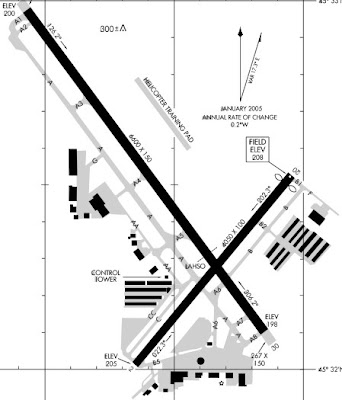
For this, it would be good to understand the layout of the airport.
I said that I would be flying in from the north, coming across the ridge, and stay to the east of runway 20. I'd be sure not to cross the extended runway line and come in for an approach to Bravo taxiway. (East of the N/S runway on the north side.). At this point, I would go to the runway intersection hold short line and wait for light signals from the tower.
Richard said, if I were to do this, I should toggle my landing lights... just so the tower could be sure to see me. They would hopefully be clearing traffic out of my path, but just to make sure... flash away.
Now, this would probably work, but Richard suggested another, better, option. Skirt the airport airspace to the east, and enter from the south so that I did not have to cross any runway to get to parking. OR, fly over the airspace and come down on the south side for the approach. Since HIO is class Delta airspace, this would mean that I would have to be higher than 2500ft AGL, or 2700ft MSL.
Good to know, I really never thought about the scenario before... so this was a good discussion.
Next question was... I'm 8 miles out and get a main rotor chip light. What do I do?
The chip light goes on when a metallic particle is detected. Obviously, there should not be much metal floating around in the gear boxes... so clearly a bad thing. The POH states that if this chip light is accompanied with noise, vibration or an increase in heat... land immediately. However, if none of these secondary indications appear, land when practical. I got that right... but that was the book answer.
Richard said that I should get to the ground as fast and safely as possible. I happen to agree... but I gave the book answer. So, while technically correct, practically I should just get the hell down.
Other than that... very successful session. Felt really good... and I passed.
On to the flight with Richard, tomorrow at 9:30am.
It was great, really nailed it. I studied like madman, and it paid off. Take a look:
Airspace Study Sheet
Stage 1 Q&A Review Document
Stage 1 - Pre Solo Questions
A new CFI, Richard O. was my CFI for this oral test. Richard will also be my CFI for the flight tomorrow.
I did make a few mistakes, stupid stuff.
I switched up some airspace information that was OBVIOUSLY wrong. He asked me to re-explain it... and I caught it. Probably nerves more than anything. If you are really interested in the details, I grouped Bravo, Charlie and Delta airspaces together when talking about VFR cloud clearances and flight visibility minimums. It should have been Charlie, Delta and Echo.
I was asked a question about translational tendency and I answered correctly, but could not completely explain the details. Translational Tendency is the tendency for the helicopter to drift to the right when in a hover. One can counteract this tendency in a few ways. First, you can hold the cyclic to the left. Second, you could re-adjust the cyclic so that when centered in the cockpit it has a little left already built in, or Third, you could have the main rotor mast tilted to the right. I got all that correct.
Follow up question was why. I said that it was from the thrust generated by the tail rotor keeping our MR torque in check. Which is correct, but not entirely correct. There is a component of rotational torque from the main rotor wanting us to yaw right. Then there is the anti-torque tail rotor system, keeping us from yawing right... and then the thrust of the tail rotor... which it pushing us to the right. Hence the tendency to translate to the right.
Other than that, I was spot on.
We did get in to some interesting discussions about radio failure and chip detectors. Wanna hear? Sure...
If I were on a solo, what would I do if I had a radio failure before entering Hillsboro airspace while coming back from Scappoose? First I would make sure I was on the right channel, then I would verify that I had the volume up and loud enough. Then, I'd check fuses. Then, I'd make sure my headset was still plugged in.
Once all the obvious stuff was taken care of, I'd just assume we had a radio failure. So, I'd set the transponder to 7600 and climb to 1500 feet so that my transponder signal could be picked up on radar. I would keep making my radio calls and I just might not be able to hear them... they might be able to hear me.
Anyway, I actually asked this question when we went to visit the tower at KHIO. They said the best and easiest thing... is to put the helicopter down somewhere - in a field, parking lot, etc and pick up the cell phone and call the tower. Tell them where I am, get permission and let them know where I am.
Now, here is where Richard got sneaky... say I don't have my phone. (Which, I assure you, will never happen. But, it MIGHT be out of battery.) I'd actually land in a field or some huge back yard. I can almost guarantee that if I landed in your back yard you would let me use your phone.
But, I get the point... no communication with the tower.

For this, it would be good to understand the layout of the airport.
I said that I would be flying in from the north, coming across the ridge, and stay to the east of runway 20. I'd be sure not to cross the extended runway line and come in for an approach to Bravo taxiway. (East of the N/S runway on the north side.). At this point, I would go to the runway intersection hold short line and wait for light signals from the tower.
Richard said, if I were to do this, I should toggle my landing lights... just so the tower could be sure to see me. They would hopefully be clearing traffic out of my path, but just to make sure... flash away.
Now, this would probably work, but Richard suggested another, better, option. Skirt the airport airspace to the east, and enter from the south so that I did not have to cross any runway to get to parking. OR, fly over the airspace and come down on the south side for the approach. Since HIO is class Delta airspace, this would mean that I would have to be higher than 2500ft AGL, or 2700ft MSL.
Good to know, I really never thought about the scenario before... so this was a good discussion.
Next question was... I'm 8 miles out and get a main rotor chip light. What do I do?
The chip light goes on when a metallic particle is detected. Obviously, there should not be much metal floating around in the gear boxes... so clearly a bad thing. The POH states that if this chip light is accompanied with noise, vibration or an increase in heat... land immediately. However, if none of these secondary indications appear, land when practical. I got that right... but that was the book answer.
Richard said that I should get to the ground as fast and safely as possible. I happen to agree... but I gave the book answer. So, while technically correct, practically I should just get the hell down.
Other than that... very successful session. Felt really good... and I passed.
On to the flight with Richard, tomorrow at 9:30am.
Monday, February 25, 2008
White board markers and post-it notes, flight essentials.
Flight #: 041
CFI: Gareth E.
Aircraft: Robinson R22 Beta II
Aircraft ID: N8340S
Duration: 1.6hrs
Cumulative Time: 46.2hrs
Got another chance to fly with Gareth this afternoon. Another good flight. Again focusing on the patterns, approaches and emergency procedures for the stage 1 flight, scheduled for the 28th.
It is really good to mix it up with instructors. Gives you a chance to get used to someone else's way of teaching and helps find the errors of your ways. Fact is, they are teaching the same thing... but with slightly different twists... sometimes it is that twist that hits home. It was the case this time too.

I have issues "hitting the spot" when coming in for a landing. I generally overshoot my spot cause I'm too high and too fast when I turn final. So, I mentioned this to Gareth before the flight just so that I could get some other eyes to help me work on it. Right before run-up, he ran in to the pilot lounge and grabbed a white board, dry erase marker and a stack of post it notes. Odd, thinks I.
Anyway, he asked me to fly a normal approach to golf intersection on alpha taxiway. On the way in, I did as I do normally... overshot my spot. So, he took controls on the next one, handed me a dry erase marker and told me to put a mark on the inside of the cockpit plastic just over the landing spot when he said we were lined up. So, I did just that. Little "x" on the screen. Then, we just did a go around.
At 700ft as I turned on the downwind leg. Out come the post-it notes and Gareth covers up the air speed indicator with a little "Now that's broken... so no point looking inside.". Great... clearly he and Kristie talk. :)
But, they are both exactly right... I look into the turn, keep my eye off my spot and either lose too much, or gain too much speed. And that is what kills me. So, I kept my eyes on the touchdown point... and wham, made it.
We continued the flight executing other maneuvers, but nothing too exciting to speak of. All pretty much on target... and feeling good.
I've got one more flight with Kristie before my Stage 1 Ground exam and flight. But right now, I'm feeling great about ground, and pretty good about the flight.
CFI: Gareth E.
Aircraft: Robinson R22 Beta II
Aircraft ID: N8340S
Duration: 1.6hrs
Cumulative Time: 46.2hrs
Got another chance to fly with Gareth this afternoon. Another good flight. Again focusing on the patterns, approaches and emergency procedures for the stage 1 flight, scheduled for the 28th.
It is really good to mix it up with instructors. Gives you a chance to get used to someone else's way of teaching and helps find the errors of your ways. Fact is, they are teaching the same thing... but with slightly different twists... sometimes it is that twist that hits home. It was the case this time too.

I have issues "hitting the spot" when coming in for a landing. I generally overshoot my spot cause I'm too high and too fast when I turn final. So, I mentioned this to Gareth before the flight just so that I could get some other eyes to help me work on it. Right before run-up, he ran in to the pilot lounge and grabbed a white board, dry erase marker and a stack of post it notes. Odd, thinks I.
Anyway, he asked me to fly a normal approach to golf intersection on alpha taxiway. On the way in, I did as I do normally... overshot my spot. So, he took controls on the next one, handed me a dry erase marker and told me to put a mark on the inside of the cockpit plastic just over the landing spot when he said we were lined up. So, I did just that. Little "x" on the screen. Then, we just did a go around.
At 700ft as I turned on the downwind leg. Out come the post-it notes and Gareth covers up the air speed indicator with a little "Now that's broken... so no point looking inside.". Great... clearly he and Kristie talk. :)
But, they are both exactly right... I look into the turn, keep my eye off my spot and either lose too much, or gain too much speed. And that is what kills me. So, I kept my eyes on the touchdown point... and wham, made it.
We continued the flight executing other maneuvers, but nothing too exciting to speak of. All pretty much on target... and feeling good.
I've got one more flight with Kristie before my Stage 1 Ground exam and flight. But right now, I'm feeling great about ground, and pretty good about the flight.
Friday, February 15, 2008
Stage 1 Ground - Review
Today I actually had a flight scheduled, but as Murphy would have it, I'm sick. I really should not be flying right now. So, we opted for a review ground lesson of stage 1 topics. I didn't ACE it, but it was pretty damn close. I need to re-review my emergency procedures... I fumbled through those. And, I actually forgot to study a particular topic Hypoxia and the effects on a pilot. So, we'll do that right here, right now:
Hypoxia:
Hypoxia:
- Oxygen deficiency
- Signs: Headache, Dizziness, Visual Impairment, Blue-ish lips, Tingling sensation
- 4 Types:
- Hypoxic Hypoxia: Lack of sufficient oxygen in the air. High altitude, etc.
- Hypemic Hypoxia: Inability for blood to carry sufficient oxygen. Sick, low blood volume, etc.
- Stagnant Hypoxia: Poor blood circulation not carrying sufficient oxygen through body.
- Histoxic Hypoxia. Blood unable to absorb sufficient oxygen through alcohol or drug use.
Wednesday, January 16, 2008
I made hover autos my bitch!
Flight #: 030
CFI: Kristie H.
Aircraft: Robinson R22 Beta II
Aircraft ID: N8340S
Duration: 1.2hrs
Cumulative Time: 33.1hrs
In excellent CFI style, Kristie got me right back into hover autrotations next flight. And it was a good thing too.... they still un-nerve me a bit, but I no longer question what I'm doing. I know.
We did quite a lot today, straight-in, turning and hover autorotations. Running landings, running takeoffs and steep approaches. All good.
And, at the end Kristie told me she wants me solo'ing by end of January. WooHoo!
That does mean I need to pass my Stage 1 Check Ride. Essentially a 2-4 hour verbal exam with an hour flight with another CFI or the Chief Flight Instructor.
Means a lot of studying in my future, but I can't wait to fly on my own!
CFI: Kristie H.
Aircraft: Robinson R22 Beta II
Aircraft ID: N8340S
Duration: 1.2hrs
Cumulative Time: 33.1hrs
In excellent CFI style, Kristie got me right back into hover autrotations next flight. And it was a good thing too.... they still un-nerve me a bit, but I no longer question what I'm doing. I know.
We did quite a lot today, straight-in, turning and hover autorotations. Running landings, running takeoffs and steep approaches. All good.
And, at the end Kristie told me she wants me solo'ing by end of January. WooHoo!
That does mean I need to pass my Stage 1 Check Ride. Essentially a 2-4 hour verbal exam with an hour flight with another CFI or the Chief Flight Instructor.
Means a lot of studying in my future, but I can't wait to fly on my own!
Sunday, December 2, 2007
Friday, November 30, 2007
Success!
 I passed! 90%
Actually the test was rather easy... but I'm sure that has to do with a lot with the training and studying. The test consisted of 20 questions taken from the "Test Prep - Private Pilot 08" manual. I missed 2 questions. One of them I had no possibility of answering as it was not a rotorcraft:helicopter question - it was mis-selected for the test. But, it was on the test, and I guessed and got it wrong. The other one - well, I got sucked into the classic standardized test question trap - while I selected the correct answer, I did not select the most complete correct answer. Pfft!
What did I win? I get to move on to the next portion of the Stage 1 test... the take-home. This part consists of 58 questions relating to questions about flight, airport operations and other tidbits of information that one would have gained coming this far in the course and paying attention. The test was really well written - mainly because none of the questions were direct... they required taking learned facts and applying them to real world situations. Really had to think. Took much longer than I expected.
Taking it in to be graded Sunday morning... we'll see.
Subscribe to:
Posts (Atom)